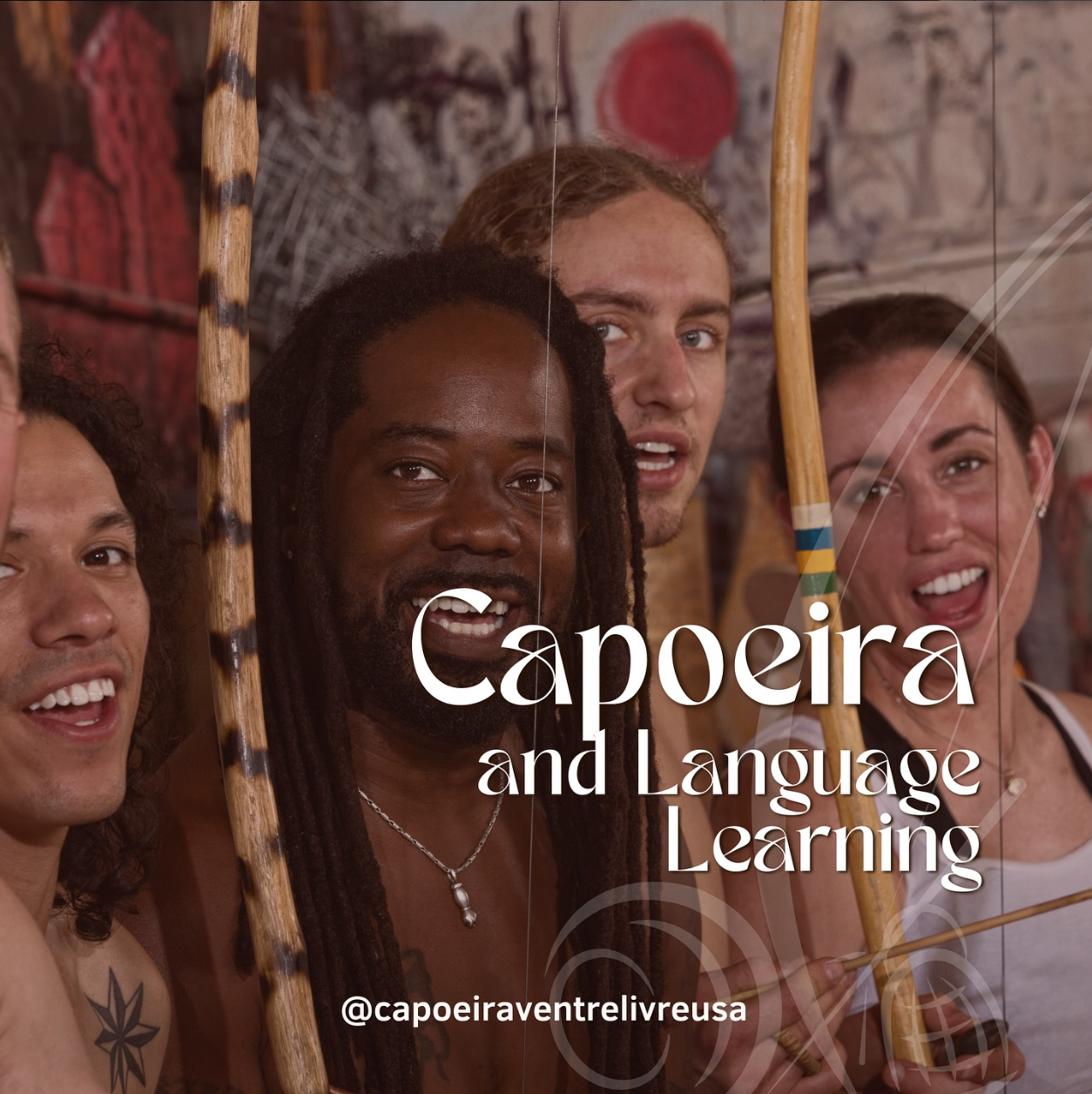
Capoeira offers a unique and immersive way to learn Portuguese. As you engage in this dynamic martial art, you'll pick up key phrases and cultural expressions used in the roda and the music. From the chants of the berimbau to the commands in the game, Capoeira provides a natural and engaging language-learning experience.
Words You'll Learn in Your First Class
From day one, you'll absorb Portuguese vocabulary naturally. The ginga (swing) is your base movement. When you hear "Iê!" you know the game is about to change. "Jogo" means game, "roda" means circle, "mestre" means master, and "camarada" means comrade — what we call each other in the circle.
Commands come in Portuguese: "Volta ao mundo" (go around the world), "Comprar o jogo" (buy the game — enter the roda). Before long, these phrases become second nature.
Learning Through Song
Capoeira songs are perhaps the most powerful language-learning tool. The corridos (call-and-response songs) use simple, repetitive structures that make grammar patterns stick. You'll sing about the sea (o mar), about freedom (liberdade), about the mestre and the roda. Through repetition, your brain absorbs vocabulary and sentence structure without the tedium of flashcards.
The ladainhas (opening songs) tell stories in flowing Portuguese. As you learn the meanings, you're learning history, culture, and advanced vocabulary all at once.
Living Portuguese vs. Classroom Portuguese
There's a difference between the Portuguese you learn in a classroom and the living, breathing Portuguese of the roda. Capoeira language is colloquial, rhythmic, and full of regional expressions from Bahia and São Paulo. You'll learn the Portuguese that Brazilians actually speak, complete with slang and cultural references.
Learning from a Native Speaker
At ACVL, you learn from Mestre Betinho — a native speaker from Praia Grande, São Paulo. His Portuguese is authentic Brazilian Portuguese, with the accent, expressions, and cultural context that only a native can provide. When he sings, when he calls out in the roda, when he tells stories of Brazil, you're hearing the real thing.
By participating in Capoeira classes and rodas, you'll not only improve your Portuguese but also deepen your understanding of Brazilian culture and traditions.
Follow us on Instagram
@capoeiraventrelivreusa